
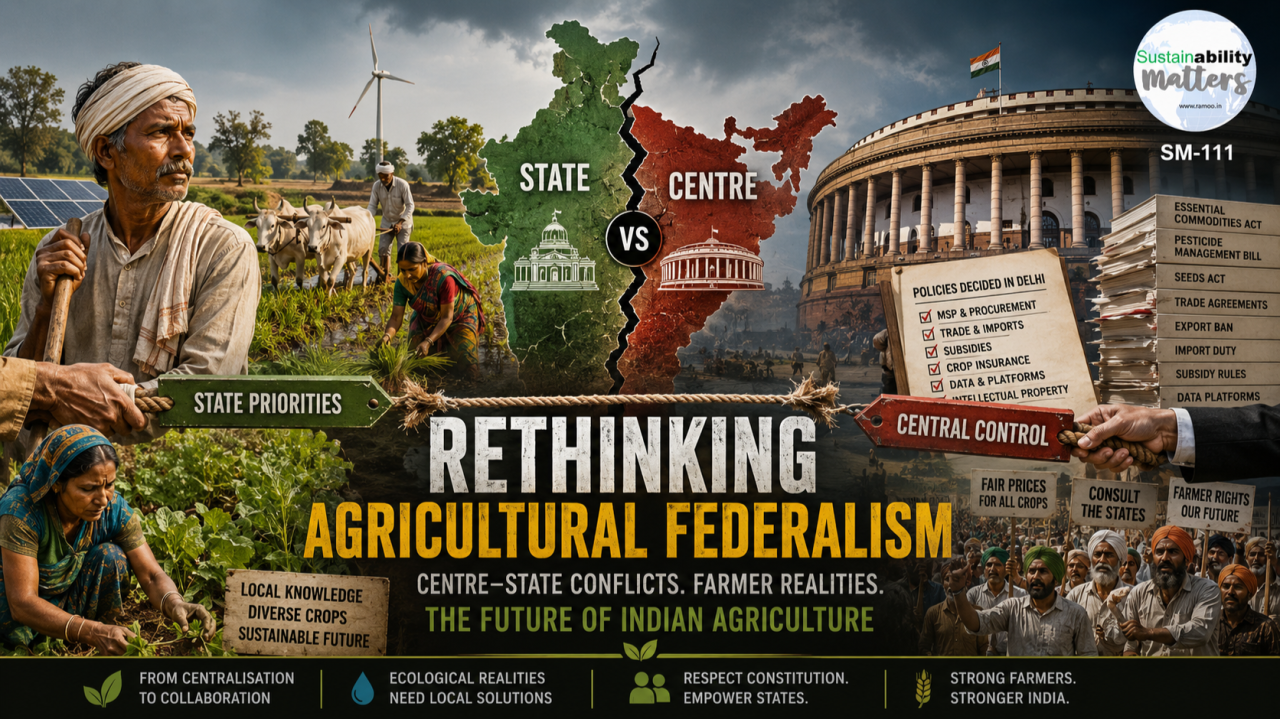
A constitutional, political-economy and rural governance question. “India’s agricultural crisis is not merely ecological or economic. It is also constitutional.” I. The Paradox at the Heart of Indian Agriculture In the constitutional architecture of independent India, agriculture was placed firmly in the
Read More
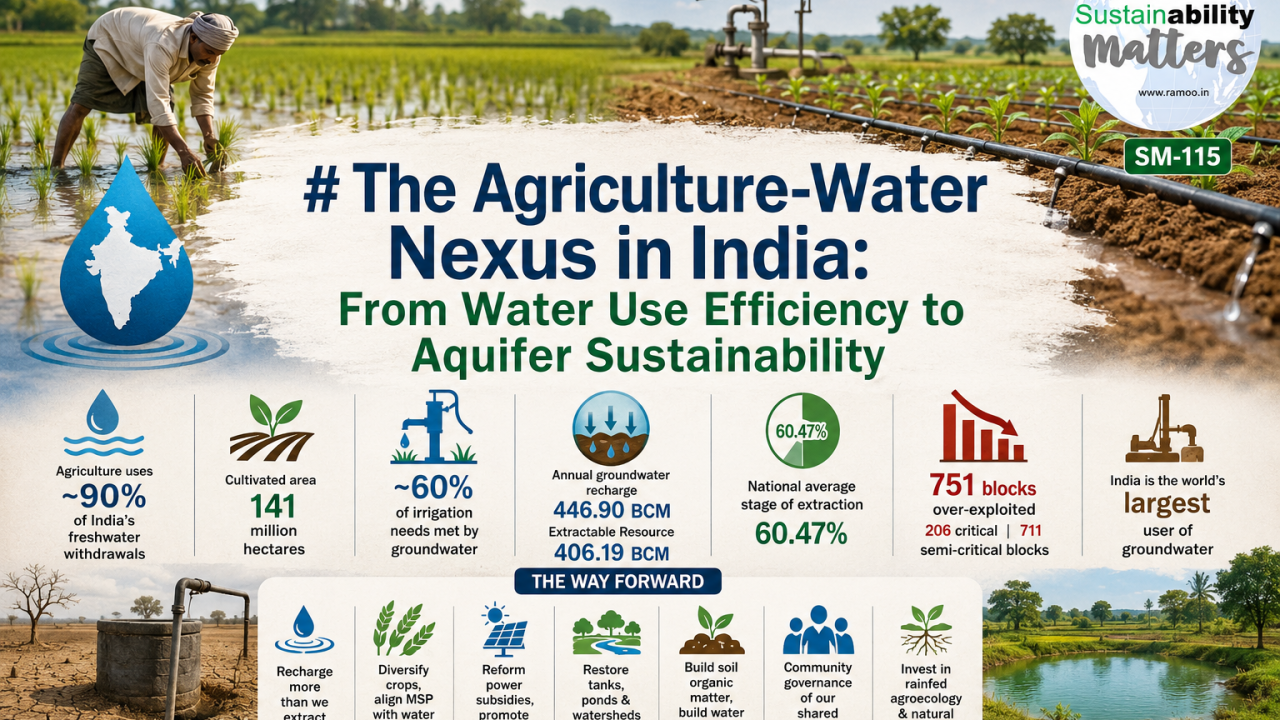
There is a striking paradox at the heart of India’s water story. Over the past two decades, the country has invested heavily in drip irrigation, sprinkler systems, micro-irrigation networks, and precision water application technologies. Schemes like the Pradhan Mantri Krishi Sinchayee Yojana
Read More
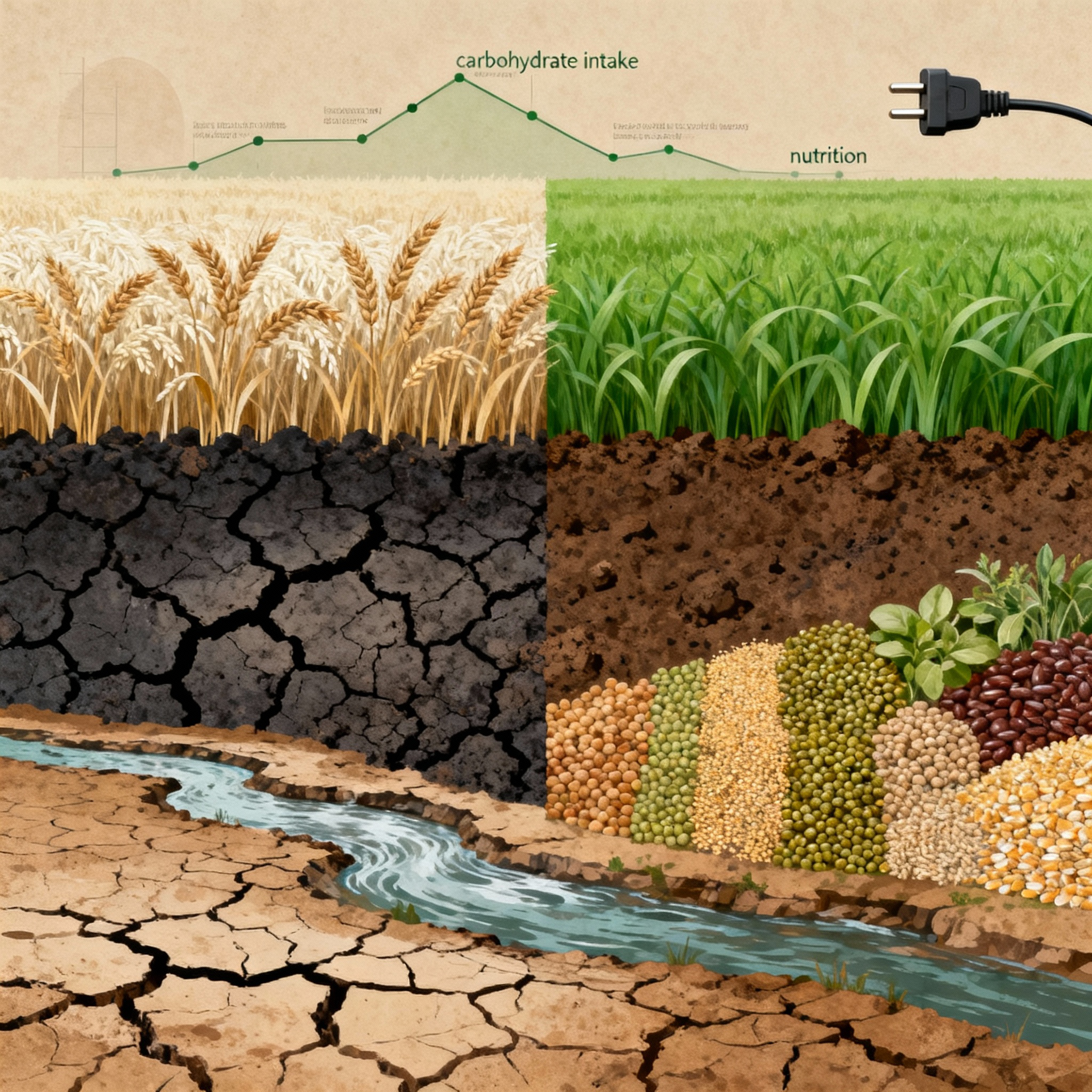
With India’s current recorded food grain production and the latest population, it is possible for the country to broadly meet the recommended dietary intake set by ICMR for every individual, but distribution challenges, food diversity, and nutrition quality gaps still pose risks
Read More
dapting Smallholder Agriculture to Climate Change Most of India lives in villages. Being a predominantly agrar- ian society, nearly three-fourths of India’s population live in ru- ral areas. Agriculture is the main source of livelihood for two- thirds of the population. The
Read More
0 Comments Author(s): Indrajit Bose @boseindrajit Date:Mar 1, 2012 ‘Erratic rainfall and rising input costs forcing farmers to migrate’ “Unable to clear a loan of Rs 2 lakh, my son committed suicide. I had to sell my ancestral house and cattle to repay the
Read More
Insect populations like all animal populations are gov- erned by their innate capacity to increase as influenced by various abiotic and biotic factors. The changes caused by the natural evolutionary forces are accelerated with the human in- terventions. After the changes like
Read More
Dr. G. V. Ramanjaneyulu, and Dr. T. A. V. S. Raghunath[1] Insect populations like all animal populations are governed by their innate capacity to increase as influenced by various abiotic and biotic factors. The changes caused by the natural evolutionary forces are
Read More

Recent Comments